
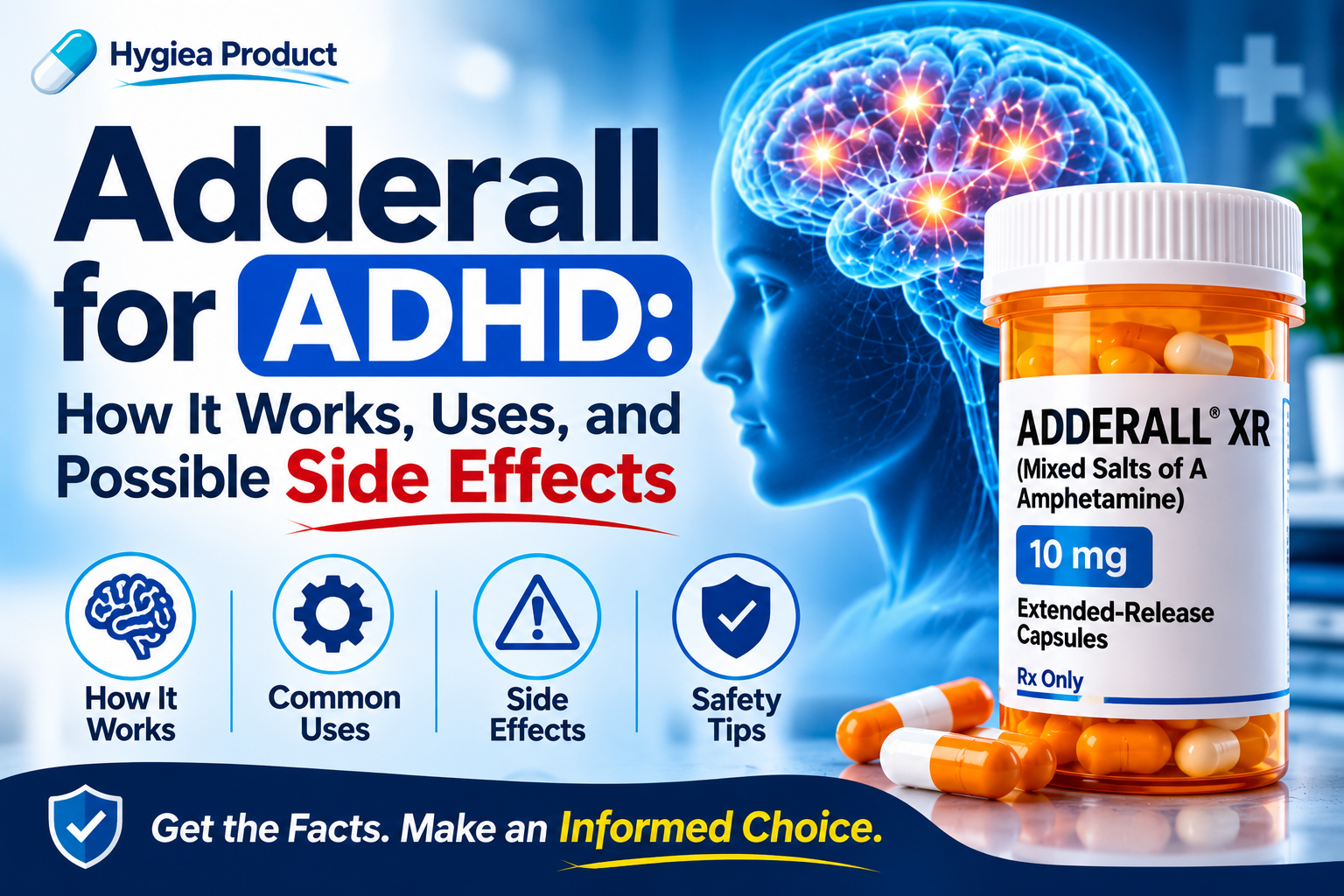
Adderall for ADHD How It Works, Uses, and Possible Side Effects 2026
Welcome to Hygiea Product! Are you looking for reliable information about Adderall for ADHD, its medical uses, how it works, and its possible side effects? Understanding this prescription medication is important before considering treatment.
Adderall is a stimulant medication commonly prescribed to help manage ADHD symptoms such as inattention, hyperactivity, and impulsive behavior.
However, its effects and possible risks can vary from person to person. Knowing what to expect can help you have a more informed conversation with your healthcare provider.
In this guide, we’ll explain how Adderall works in the brain, explore its medical uses and potential benefits, discuss common and serious side effects, and highlight important safety precautions to know in 2026.
What Is Adderall and What Is It Used For?
Adderall is a prescription medication containing a combination of two stimulant ingredients: amphetamine and dextroamphetamine. It works by influencing the activity of certain chemicals in the brain that help regulate attention, alertness, and impulse control.
Healthcare professionals primarily prescribe Adderall for:
- Attention-Deficit/Hyperactivity Disorder (ADHD)
- Difficulty maintaining attention associated with ADHD
- Hyperactivity and impulsive behavior associated with ADHD
Adderall is also prescribed for narcolepsy in its immediate-release formulation. However, its use depends on the patient’s diagnosis and the healthcare provider’s evaluation.
Approved Medical Uses: ADHD and Narcolepsy
Adderall is approved for treating ADHD, a neurodevelopmental condition that can affect attention, activity levels, and impulse control.
For people with ADHD, the medication may help manage symptoms such as:
- Difficulty concentrating on tasks
- Frequent distractions
- Impulsive decisions
- Excessive restlessness
- Problems organizing daily activities
- Difficulty completing responsibilities
Adderall immediate-release tablets are also approved for narcolepsy, a chronic sleep disorder that can cause excessive daytime sleepiness and sudden sleep episodes.
It is important to understand that Adderall does not cure ADHD or narcolepsy. Instead, it helps manage certain symptoms while the medication is active.
What Does Adderall Do for ADHD in the Body?
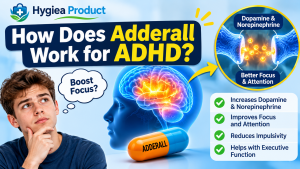
As a central nervous system stimulant, Adderall affects the availability and activity of two important neurotransmitters: dopamine and norepinephrine.
Dopamine plays an important role in:
- Attention and motivation
- Reward and reinforcement
- Learning and memory
- Movement and behavior
Meanwhile, norepinephrine helps regulate:
- Alertness and wakefulness
- Attention and concentration
- Heart rate
- Blood pressure
- The body’s response to stress
In people with ADHD, Adderall can improve certain aspects of attention and executive functioning by increasing activity in these neurotransmitter systems.
For some patients, this may make it easier to concentrate, manage impulses, and complete everyday tasks.
Is Adderall a Controlled Substance?
Yes, Adderall is classified as a Schedule II controlled substance in the United States.
This classification means that it has accepted medical uses but also carries a significant potential for misuse, abuse, and dependence.
Because of this classification, Adderall is subject to strict requirements involving:
- Prescription authorization
- Dispensing and recordkeeping
- Storage and handling
- Prescription refill restrictions
- Monitoring for misuse and dependence
Patients should keep their medication securely stored and never share it with another person. Taking Adderall without a prescription or using more than prescribed can lead to serious health consequences.
How Does Adderall Work for ADHD?
Understanding how Adderall works requires looking at the relationship between brain chemistry and ADHD symptoms.
ADHD can affect the brain systems involved in attention, planning, organization, and self-regulation. Adderall influences neurotransmitter activity in these systems, which may help patients manage symptoms more effectively.
Understanding ADHD Symptoms and Brain Chemistry
ADHD is a neurodevelopmental condition that can affect both children and adults. Symptoms generally fall into two main categories: inattention and hyperactivity-impulsivity.
Common symptoms include:
- Difficulty staying focused
- Forgetfulness in everyday activities
- Problems organizing tasks
- Frequent interruptions during conversations
- Restlessness or excessive movement
- Difficulty waiting or controlling impulses
ADHD is associated with differences in brain development and the functioning of certain neural networks. Dopamine and norepinephrine signaling are among the systems involved in attention and executive functioning.
These differences can make it harder for some individuals to manage activities that require sustained concentration, planning, and self-control.
Role of Dopamine and Norepinephrine
Dopamine and norepinephrine are important neurotransmitters involved in regulating attention and behavior.
Dopamine helps the brain process motivation, rewards, and reinforcement. It also contributes to learning and the ability to remain engaged with activities.
Norepinephrine is involved in alertness, attention, and the brain’s response to information.
When these neurotransmitter systems are not functioning optimally, individuals with ADHD may experience difficulty maintaining attention or controlling impulses.
Adderall increases the activity of dopamine and norepinephrine signaling, which can improve certain ADHD symptoms.
Why Adderall Helps With Focus and Impulse Control
Adderall works through several mechanisms that influence neurotransmitter activity.
These include:
- Increasing the release of dopamine and norepinephrine from nerve cells.
- Affecting neurotransmitter transporters involved in the movement of these chemicals.
- Reducing the reuptake of dopamine and norepinephrine into nerve cells.
- Increasing the availability of these neurotransmitters in areas involved in attention and behavior regulation.
Through these effects, Adderall may help improve concentration, reduce impulsivity, and manage hyperactivity.
Although Adderall is a stimulant, some individuals with ADHD experience improved behavioral regulation and better control over their daily activities when taking it as prescribed.
However, individual responses vary. The medication may not provide the same benefits for every patient.
Adderall Dosage, Forms, and How to Take It
Choosing an appropriate Adderall formulation and dosage requires an individual medical assessment. Healthcare professionals consider age, diagnosis, symptom severity, medical history, and response to treatment.
Adderall is available in two primary formulations: immediate-release and extended-release.
Immediate-Release vs Extended-Release (IR vs XR)
Adderall IR and Adderall XR are designed to deliver medication differently.
Adderall IR (Immediate-Release)
Adderall IR is an immediate-release tablet formulation. It releases its active ingredients relatively quickly after administration.
Its effects generally last for a shorter period than those of the extended-release formulation. Healthcare professionals may prescribe it when shorter periods of medication coverage are appropriate.
Adderall XR (Extended-Release)
Adderall XR is an extended-release capsule formulation designed to provide longer medication coverage.
It uses a delivery system that releases medication in two phases, helping maintain its effects over a longer period than immediate-release tablets.
| Feature | Adderall IR | Adderall XR |
| Form | Tablet | Extended-release capsule |
| Release type | Immediate-release | Extended-release |
| Medication coverage | Shorter duration | Longer duration |
| Administration | According to prescribed schedule | Generally taken once daily |
| Common treatment consideration | Shorter coverage needs | Longer daily coverage needs |
The two formulations are not automatically interchangeable. A healthcare professional should determine which one is appropriate.
Typical Dosage Considerations by Age Group
Adderall dosage varies according to age, formulation, medical history, and individual response.
For children, healthcare professionals carefully consider growth, appetite, sleep, and behavioral changes when prescribing stimulant medications.
For adolescents, treatment decisions also consider school performance, daily responsibilities, and possible side effects.
For adults, the healthcare provider evaluates ADHD symptoms, other medical conditions, and potential medication interactions before selecting a treatment plan.
There is no single dosage that is appropriate for everyone. Patients should follow their prescription instructions rather than adjusting the dose independently.
Tips for Safe Administration
Taking Adderall correctly is important for reducing potential risks and supporting treatment effectiveness.
Consider these general safety practices:
- Follow prescription instructions: Take the medication exactly as directed by your healthcare provider.
- Pay attention to timing: Follow the recommended administration schedule. Taking stimulant medication late in the day may interfere with sleep.
- Understand the formulation: Do not crush, split, or alter extended-release medication unless the product instructions and pharmacist specifically allow it.
- Discuss food and other medications: Ask your pharmacist about food-related instructions and possible interactions.
- Avoid changing the dose: Never increase, decrease, or repeat a dose without professional guidance.
If you miss a dose, follow the medication instructions or ask your pharmacist what to do. Do not double a dose to make up for a missed one.
Common and Serious Side Effects of Adderall
Like other prescription stimulant medications, Adderall can cause side effects. Some are relatively mild, while others may require medical attention.
Understanding these possible reactions can help patients recognize when they should contact a healthcare professional.
Short-Term Side Effects: Appetite Loss, Insomnia, and More
Some patients experience side effects when starting Adderall or adjusting their prescribed treatment.
Common side effects include:
- Reduced appetite
- Dry mouth
- Difficulty sleeping
- Headache
- Stomach discomfort
- Increased heart rate
- Nervousness
- Irritability
- Weight loss
Children taking stimulant medications may also experience changes in appetite, sleep, or growth patterns.
These effects can vary depending on the formulation, prescribed dose, and individual response.
Long-Term Effects: Tolerance, Dependence, and Other Risks
Long-term Adderall treatment requires regular medical monitoring.
Some important considerations include:
- Tolerance: Some patients may experience changes in their response to medication over time. Any concern about reduced effectiveness should be discussed with the prescriber rather than addressed by increasing the dose independently.
- Dependence: Regular use can lead to physical dependence. Suddenly stopping after prolonged use may cause withdrawal symptoms.
- Cardiovascular effects: Adderall can increase heart rate and blood pressure. Patients with certain heart conditions may face additional risks.
- Growth concerns: In children, stimulant medications may affect appetite and growth. Healthcare professionals may monitor height and weight during treatment.
- Psychiatric effects: Some individuals may experience mood changes, agitation, or new or worsening psychiatric symptoms.
Long-term treatment should be reviewed regularly to make sure the benefits continue to outweigh the potential risks.
When to Call a Doctor
Certain symptoms require prompt medical attention.
Contact a healthcare professional if you experience:
- Persistent or unusually severe headaches
- Significant changes in mood or behavior
- Ongoing sleep difficulties
- Noticeable weight loss
- Unusual changes in heart rate or blood pressure
- Numbness, pain, or color changes in fingers or toes
Seek emergency medical care for chest pain, fainting, severe breathing difficulties, seizures, or symptoms of psychosis such as hallucinations or severe confusion.
Who Should Be Careful When Using Adderall?
Adderall may not be appropriate for everyone. Certain medical conditions, medications, and personal health factors can increase the possibility of complications.
Before starting treatment, discuss the following with your healthcare provider:
- Heart disease or serious cardiovascular conditions
- High blood pressure
- A history of substance misuse
- Bipolar disorder or other psychiatric conditions
- Seizure disorders
- Thyroid problems
- Circulation-related conditions
- Pregnancy or breastfeeding
- Other prescription medications and supplements
People taking certain medications, including monoamine oxidase inhibitors (MAOIs), need particular medical attention because serious interactions can occur.
A healthcare professional should review your medical history and current medications before prescribing Adderall.
Alternatives and Other ADHD Medications
Adderall is not the only medication used to treat ADHD. Several other stimulant and non-stimulant treatments are available.
The appropriate option depends on the patient’s symptoms, medical history, treatment response, and possible side effects.
Other Stimulant Options: Ritalin, Vyvanse, and Concerta
Several other stimulant medications are used to manage ADHD symptoms.
Ritalin (Methylphenidate)
Ritalin contains methylphenidate, a stimulant medication that affects dopamine and norepinephrine activity. It is available in different formulations and may be considered as an alternative to amphetamine-based treatments.
Vyvanse (Lisdexamfetamine)
Vyvanse contains lisdexamfetamine, a prodrug that is converted into dextroamphetamine in the body. It is used to treat ADHD and has a different release and activation process from Adderall.
Concerta (Methylphenidate Extended-Release)
Concerta is an extended-release methylphenidate medication designed to provide longer-lasting medication coverage throughout the day.
Non-Stimulant Medications: Strattera and Guanfacine
Non-stimulant medications may be considered when stimulant treatment is unsuitable, poorly tolerated, or not providing sufficient benefits.
Strattera (Atomoxetine)
Atomoxetine is a non-stimulant ADHD medication that works primarily by affecting norepinephrine activity. It generally takes longer to produce noticeable benefits than stimulant medications.
Guanfacine
Guanfacine is a non-stimulant medication that affects certain receptors involved in attention and impulse control. Extended-release guanfacine may be used as part of an ADHD treatment plan.
Lifestyle and Behavioral Therapies
Medication is not the only part of ADHD management. Behavioral and lifestyle approaches can also support patients in managing daily challenges.
Some helpful approaches include:
- Cognitive Behavioral Therapy (CBT)
- ADHD-focused counseling
- Organizational and time-management strategies
- Parent training in behavior management
- Regular physical activity
- Consistent sleep routines
- School or workplace support
For children and adolescents, behavioral interventions and appropriate educational support can be important parts of treatment.
For many patients, combining medication with behavioral strategies provides a more comprehensive approach to managing ADHD.
Conclusion
Understanding how Adderall for ADHD works can help patients make more informed decisions about their treatment. By influencing dopamine and norepinephrine activity in the brain, Adderall may help improve attention, reduce impulsivity, and manage hyperactivity.
However, its benefits must be considered alongside potential risks. As a Schedule II controlled substance, Adderall requires a valid prescription, responsible use, and regular medical monitoring.
The choice between immediate-release and extended-release formulations depends on individual treatment needs. Other stimulant medications, non-stimulant options, and behavioral therapies may also be appropriate for certain patients.
Most importantly, ADHD treatment should be individualized. Patients should work closely with qualified healthcare professionals, report concerning side effects, and attend recommended follow-up appointments.
With appropriate medical guidance and a well-planned treatment approach, many people with ADHD can manage their symptoms and improve their everyday functioning with reliable educational resources at Hygiea Product.
Key Takeaways
Understanding Adderall’s role in ADHD treatment can help patients and families make informed healthcare decisions.
- Adderall contains amphetamine and dextroamphetamine, two stimulant ingredients that affect dopamine and norepinephrine activity.
- It is primarily prescribed for ADHD and is also used for narcolepsy in its immediate-release formulation.
- Adderall is available in immediate-release and extended-release formulations.
- Common side effects include reduced appetite, dry mouth, headaches, and difficulty sleeping.
- Serious risks include cardiovascular complications, psychiatric reactions, misuse, and dependence.
- Other treatment options include Ritalin, Vyvanse, Concerta, atomoxetine, and guanfacine.
- Regular medical monitoring helps evaluate treatment effectiveness and identify potential side effects.
FAQs
Q1. How does Adderall work for ADHD?
Adderall increases dopamine and norepinephrine activity in the brain, which may help improve attention, concentration, and impulse control.
Q2. What is Adderall commonly prescribed for?
It is primarily prescribed for ADHD and may also be prescribed for narcolepsy in its immediate-release formulation.
Q3. What are the common side effects of Adderall?
Common side effects include reduced appetite, dry mouth, headache, difficulty sleeping, nervousness, and increased heart rate.
Q4. What is the difference between Adderall IR and XR?
Adderall IR is an immediate-release tablet, while Adderall XR is an extended-release capsule designed to provide longer medication coverage.
Q5. Can Adderall cause dependence?
Yes. Adderall has the potential for misuse, abuse, and physical dependence, which is why medical supervision is important.
Q6. Are there alternatives to Adderall for ADHD?
Yes. Alternatives include stimulant medications such as Ritalin and Vyvanse, non-stimulants such as atomoxetine and guanfacine, and behavioral therapies.
Q7. Is Adderall suitable for everyone with ADHD?
No. A healthcare professional must evaluate symptoms, medical history, and potential risks before recommending Adderall.